I did not fall
in love with sake
immediately.
I built the relationship. Intellectual, emotional, slow.
I am a chef. I love pairing food with drinks, and I love what people are doing now with drinks that have no alcohol in them at all. I love wine too — Burgundy, white Rioja, sour African wines, rare Bulgarian wines. I have been to Japan a few times, but that is not really the story.
The story is what I found in sake. It does not pair the way wine pairs. It adds a taste to the dish. Sometimes a few.
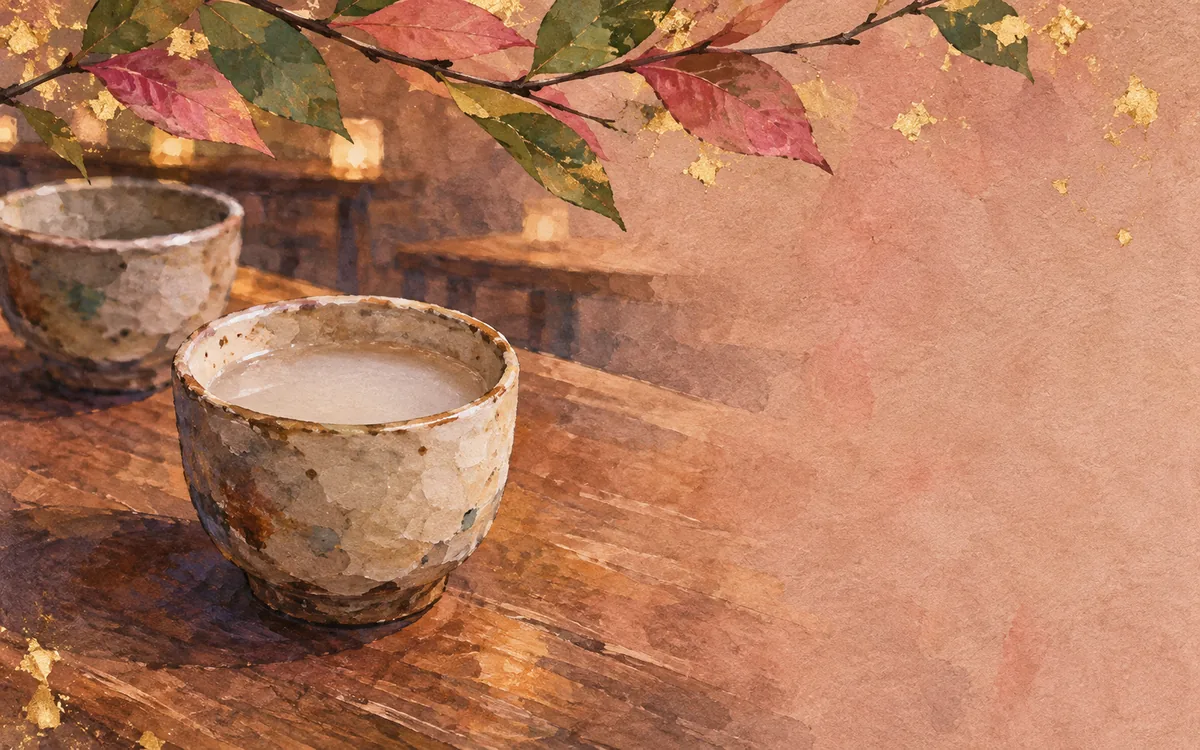
An autumn street in Tokyo, on my way to meet my brother. A small kaiseki — wood, smooth light, three or four tables in all. We hugged. We had not seen each other in months, and there we were, family, thousands of kilometers from home.
That was the night I found the cloudy, unpasteurized sake. I had loved sake before that. That was the moment I fell in love.
What most people have heard
- Sake is strong, like whiskey.
- Sake is always served warm.
- Sake is something you drink on its own.
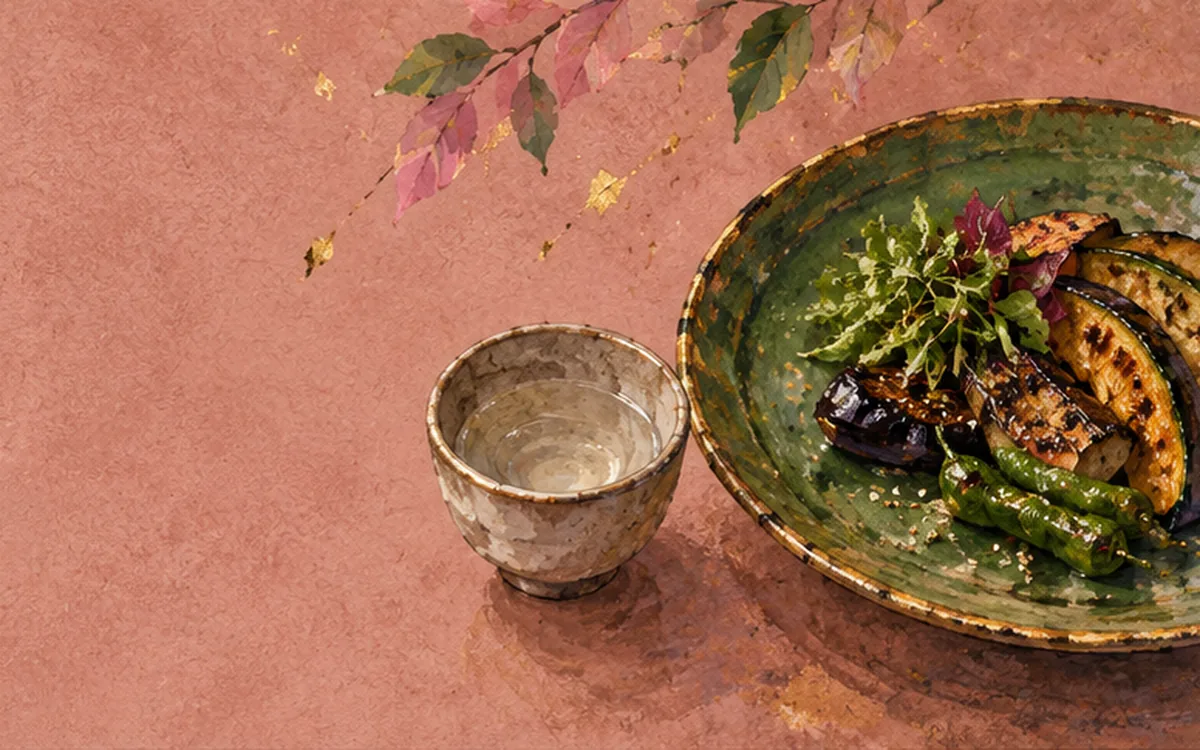
Sake is usually 14–16% — stronger than most wine, and nowhere near whiskey. Temperature is a choice for a particular sake, not a category. And it belongs at the table, with food.
People confuse kink and sex positive in exactly the same shape. That being submissive means allowing everything. That being dominant means doing whatever you want.
No, no, no.
Both are a curated, particular relationship, built on communication, curiosity, consent — and really letting yourself try.
Eating out, cooking at home — you have to be ready to take food, and take going out, as theater. As experience. And then let your taste lead you.
Ask. Always ask.
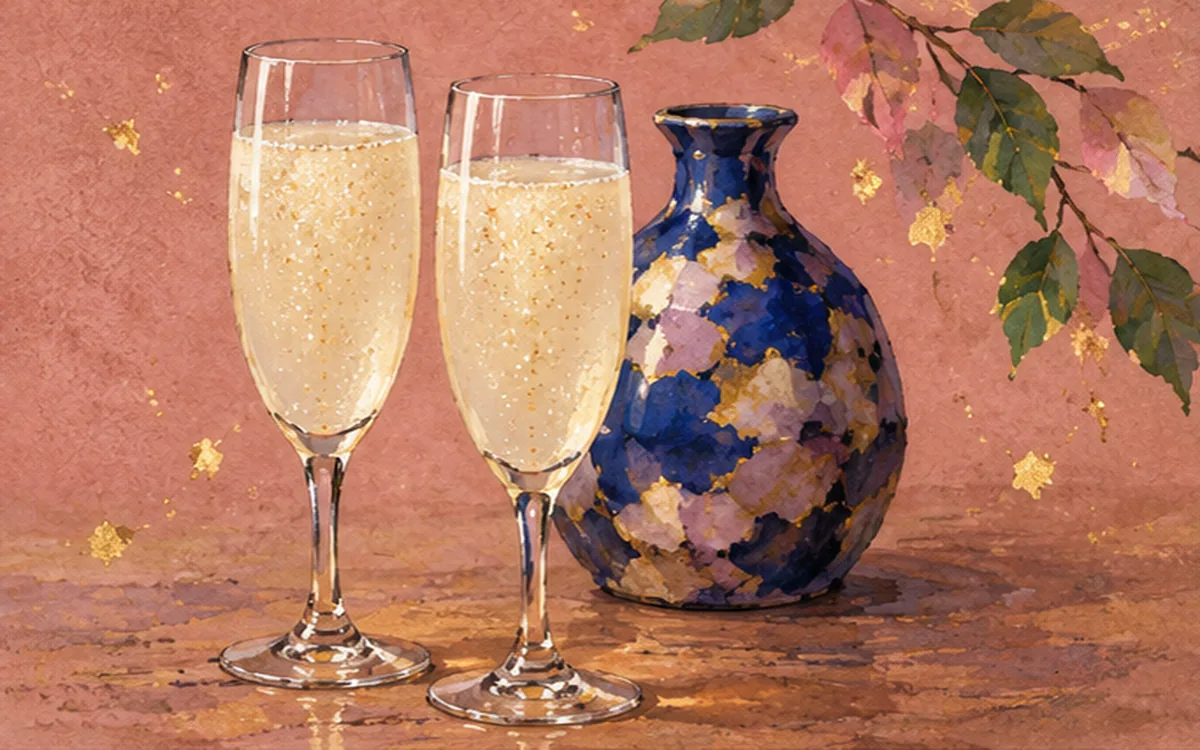
Another table, another evening, and someone across from me. I asked for the drink menu and found something I had tried once before. The waiter said: champagne.
I smiled, asked whether it was all right to order for both of us — and said: no. Please. This one.
The bottle came, in tall champagne glasses, sparkling.
It was sparkling sake. I have been in love with it ever since.
Sake Positive
A positive sense
of your own.
Develop your taste. Learn what you discover — and what is not your taste. That second half is not a failure. It is half of what a taste is.
A yes, a no, a maybe. All welcome.
No ratings. No right palate.
Your mouth speaks first.
For what it is worth: high-end junmai, and the non-traditional ones too. Mostly I drink sake with Asian food, and I let the feeling grow — what am I tasting? What is this?
None of that is a recommendation. It is mine.
And I respect everyone who makes it. Like wine, it is hard work, a process, a craft that is not easy at all. Each sake has a story, and a journey.
Sake Positive is a small companion for the restaurant table. A Coach when you want a nudge, space for your own words when you want to lead. It is still taking shape.
Then put the phone down.
There's a whole evening here.
If you drink, drink in moderation. Alcohol carries health risks, and choosing less or none is always welcome. For adults of legal drinking age.